Risk and Protective Factors
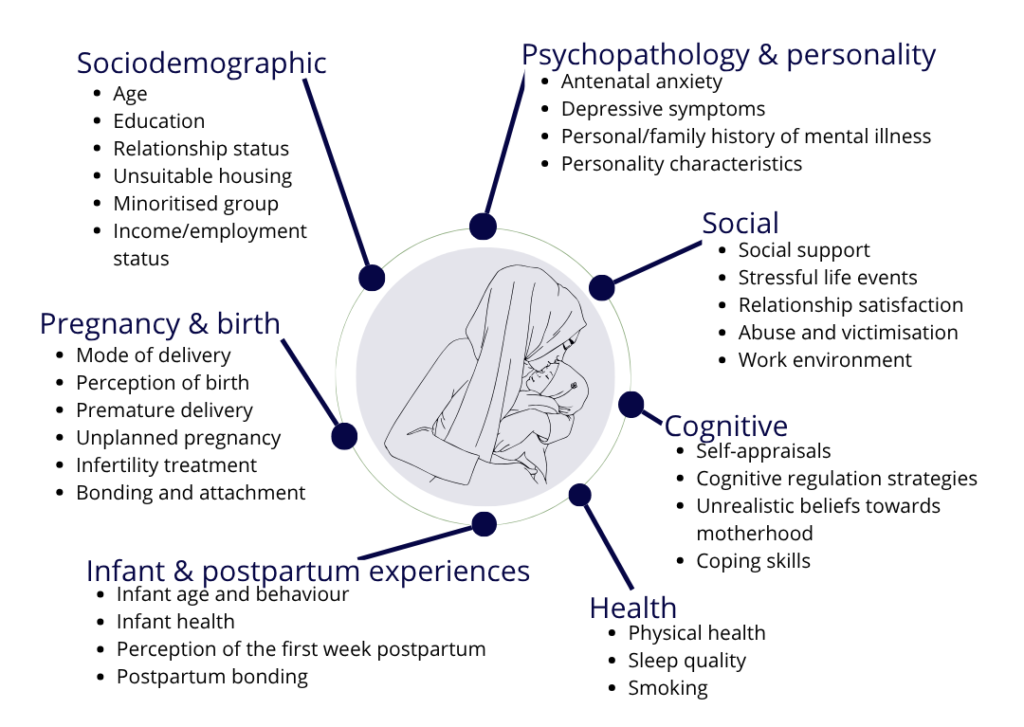
Research has identified a range of factors associated with perinatal anxiety. Many of these factors are quite common and not a concern when viewed individually. However, when several risk factors combine, vulnerability to perinatal anxiety increases1.
Some factors can be resolved fairly easily with support (sometimes called modifiable risk factors), whilst others are more enduring or difficult to address1. Identifying modifiable risk factors and accessing support can reduce the risk of more severe or recurrent episodes of anxiety.
1Jones et al., 2025
Click items on the list below to find out more about common risk factors for PNA
-
Social interactions
- Lack of social, emotional, informational, or practical support
- Stressful life events
- Relationship difficulties
- Abuse and victimisation
- Negative work environment
-
Pregnancy and birth experiences
Unwanted or unplanned pregnancy
Past or present pregnancy complications
Premature birth
-
Parent-infant bonding
Difficulties with bonding or attachment during pregnancy or after birth
-
Postpartum experiences
Infant health problems
Difficult infant behaviour
Difficulties during the first week postpartum
-
Cognitive vulnerabilities
- Holding unrealistic beliefs about parenthood
- Perfectionist tendencies
- Low self-confidence (especially in parenting skills)
- Poor coping strategies
-
Psychopathology
- Previous mental health difficulties
- Family history of mental illness
-
Physical health
- Sleep quality
- Physical health
- Smoking
-
Sociodemographic factors
- Age
- Education level
- Relationship status
- Unsuitable housing
- Minoritised group
- Income
- Employment status
Protective factors
There is good news – there are also protective factors that may help to reduce the risk of developing anxiety; these include:
• Good support networks with family and/or friends.
• Talking about feelings with trusted others.
• Looking after physical health, e.g., getting enough sleep, exercise, eating well, etc.
• Looking after mental health, e.g., relaxation techniques like breathing exercises and mindfulness, etc.
Reducing the risk of PNA
There is a lot that we can do to help families reduce their risk of experiencing PNA. Follow the links below to find out more about improving access to diagnosis and support, and preventative support strategies that you might be able to incorporate into your work.
This website also includes a selection of self-help tools and signposting information that can help people to make the best of their mental health and reduce the risk of experiencing distressing anxiety symptoms.
Follow the links below to find out more.