Understanding Your Anxiety
Before you can treat your anxiety symptoms, the first thing you really need to do is understand how your anxiety manifests itself, as people can experience it in very different ways. Take some time to think about your own experiences with anxiety in terms of the CBT type of model. What are the thoughts, physical responses, and behaviours associated with your anxiety?
It might help to write this down on your phone, computer, or on a piece of paper.
Thinking about how you experience anxiety may initially feel uncomfortable and may even make you feel anxious. Don’t worry if this happens – this is a totally normal reaction to facing your worries and anxiety head-on. Understanding your symptoms is part of the process, and hopefully, the more you understand how your anxiety works, the more your anxious feelings will reduce.
Understanding the triggers behind your anxiety
Now that we’ve looked at how you experience anxiety, it can also be useful to understand when your anxiety symptoms occur. Being aware of how triggers set off your anxiety is a critical step in learning to manage it.
To identify possible anxiety triggers, ask yourself:
-
Where?
Where were you when you got anxious? Does anxiety only happen in certain places, or certain types of places (e.g., hospital, home at night, public spaces)?
-
Who?
Who were you with? Do certain people or interactions increase anxiety?
-
What?
What happened just before the anxiety episode: were there any specific cues? Was there:
- a physical cue (e.g., dizziness, baby movement, tiredness)?
- something you saw or read online?
- pressure, comparison, or unexpected demands?
Example
Let’s look at a perinatal example that applies regardless of pregnancy or postpartum stage:
Andrea feels anxious that something bad might happen to her baby. She spends a lot of time online reading about other people’s difficult experiences. When reading worrying stories, she notices:
-
clammy hands
-
faster heartbeat
-
difficulty breathing
-
a sense of impending doom
The anxiety only reduces when she stops searching and seeks reassurance from her partner.
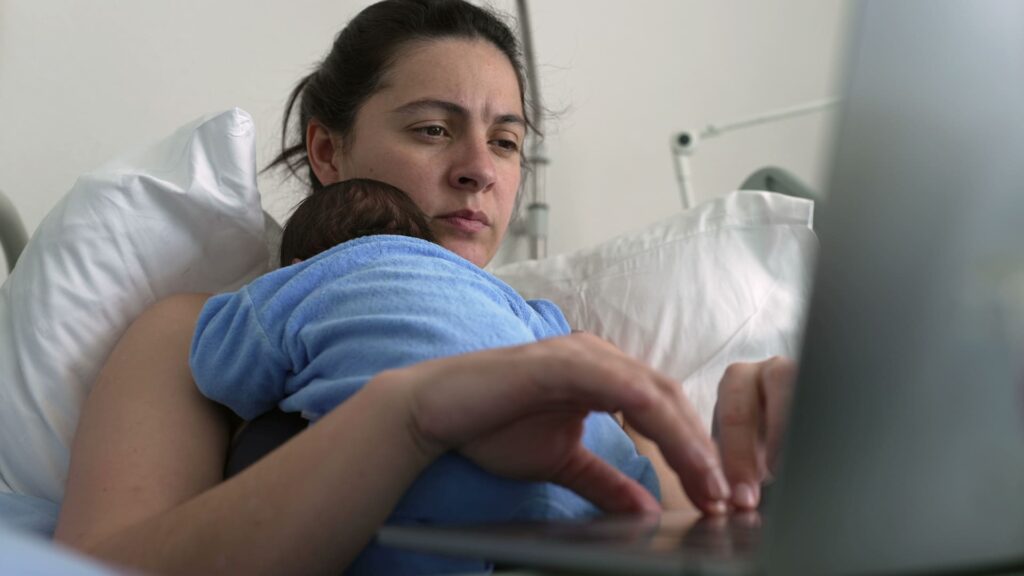
Andrea’s situational triggers
-
She was alone with her baby
-
She was on her computer
-
Reading about other people’s (often scary) stories
Linking these triggers up to her experience of anxiety, Andrea could see that her thoughts and fears were driving her internet searching behaviours, and this was leading her to think, “What if this happens to me?” This helped her to recognise that her exposure to negative information wasn’t making her feel better, but it was feeding into her initial negative thoughts and increasing her anxiety. She decided to actively cut down on the amount of internet searching she was doing to see if it would help reduce her anxiety.
Activity: Understanding your anxiety
Now it’s your turn. Think about the last time you felt anxious. What was happening at the time? (If you feel anxious all the time, think of a particular occasion where it was especially noticeable.)
-
Where were you?
-
Who were you with?
-
What was happening / about to happen when you started to feel anxious?
Try to make a habit of noting these details when you feel anxious. This can help to identify potential patterns that may be triggering your symptoms. You may even find it helpful to keep a note of this in a Thought Diary, as tracking your thoughts and feelings can often be therapeutic in itself, and help you to see your anxiety in a more objective way.
Better understanding your triggers puts you in a stronger position to manage them.