What is Anxiety?
Anxiety can be helpful. From an evolutionary standpoint, fear and anxiety have helped us to survive. When faced with a situation where our safety or wellbeing was on the line, fear or anxiety would kick in, activating the regions of our brain that control our body’s fight or flight response; those primitive, automatic reactions that prepare us to fight or flee a predator. Our breathing and heart rate increase, our muscles tense, we experience nervous sensations in our body – all in preparation for survival.
While effective in situations where your survival is on the line, our bodies don’t know the difference between being faced by a sabre-tooth tiger or the anxiety we feel as a result of modern-day stressors. Whether the object of our anxiety is real or imagined, the biological response is essentially the same.
Sometimes the things we are anxious about are obvious, for example:
-
worries about birth
-
concerns about the health of the baby
-
anxiety about medical appointments or tests
At other times, anxiety can feel constant without any specific trigger.
Anxiety is normal and even useful when it is in proportion to the situation. It becomes problematic when it becomes overwhelming or when we begin to overreact to normal stresses of everyday life.
Anxiety symptoms
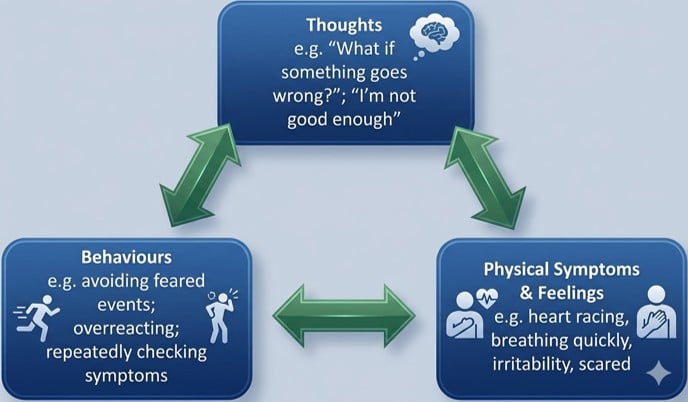
Anxiety consists of three different types of symptoms: thoughts, physical symptoms and feelings, and behaviours.
Click on each of the dropdowns below to find out more
-
Thoughts
Thoughts refer to the inner speech (or images) that occur in our own minds. When we are anxious, these thoughts can often be unhelpful, focusing on the object of our anxiety. These anxious thoughts may be:
- racing or repetitive
- intrusive or overwhelming
- focused on worst-case scenarios
- filled with worries, predictions, or “what ifs”
-
Physical symptoms and feelings
These might include:
- racing or irregular heartbeat
- feeling breathless orhyperventilating
- butterflies in the stomach
- tense muscles, shaking/trembling
- nausea or dizziness
- feeling on edge, irritable or overwhelmed
- tingling or clammy hands or feet
- difficulty sleeping
-
Behaviours
Behaviours are the things that we do to manage our anxiety, but as we’ll see, they can often make symptoms worse. This might include:
- avoiding anxious situations, activities, places, or people
- constantly checking things you are worried about (e.g. symptoms, baby, routines, movements, etc.)
- repeatedly seeking reassurance
- overplanning or being overly cautious and hyperaware of potential threats or dangers
- hiding feelings or pretending everything is fine
In anxiety, our thoughts, physical feelings, and behaviours all influence one another.
Worrying thoughts can increase physical symptoms, physical symptoms can reinforce anxious thoughts, and behaviours such as avoidance or checking can keep the cycle going.
The good news? By changing any one part of the cycle (thoughts, behaviours, or physical responses) we can begin to reduce anxiety, because improvements in one area often positively affect the others.
This is the core principle of Cognitive Behavioral Therapy (CBT); an evidence-based way to regain control over your wellbeing.
If you think you might need help with some of these symptoms, it might be worth asking your healthcare provider about CBT.
Some Perinatal Examples
Below are some example of the thoughts, physical symptoms and feelings, and behaviours that are common in perinatal anxiety.
Don’t worry if you don’t relate to the examples here… no two people are the same, and people experience anxiety in very different ways. These are just examples that cover some of the experiences women with perinatal anxiety report.
-
Thoughts
1. “I feel like something bad is going to happen to the baby.”
2. “I have so much to do, but it’s so difficult to get on top of everything.”
3. Constant thoughts about or flashbacks to birth
4. “What’s wrong with me. Other mothers seem fine – why am I struggling?” -
Physical Symptoms & Feelings
1. Fearful, restless, racing heartbeat, overwhelmed
2. Nervousness, irritability, clammy hands
3. Panicky, short of breath, tense, not sleeping
4. Tired, isolated, irritable -
Behaviours
1. Checking for signs of problems with the baby, constantly searching the internet and reading stories on parenting forums and websites
2. Overplanning and over-checking
3. Avoiding talking about the birth, keeping fears to oneself
4. Pretending everything is ok, avoiding going out seeing friends, hiding feelings from others