Thinking Traps
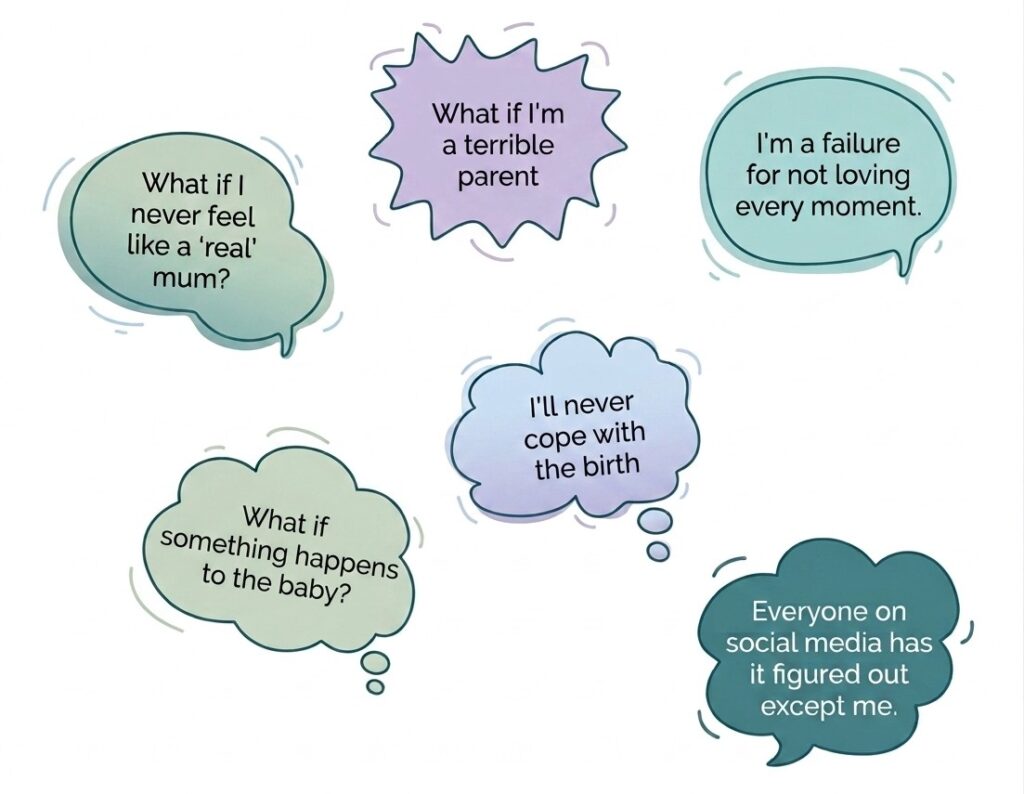
We all fall into common thinking traps at times – telling ourselves that things are bound to go wrong, or judging ourselves or others harshly.
Sometimes our negative thoughts might have some truth to them, but most of the time they don’t. Yet, we can find ourselves falling into these thinking traps again and again. It can become almost like a habit.
Unfortunately, these kinds of worries are very normal, and very common throughout the perinatal period—whether you are pregnant or caring for a baby. But if we get stuck in an unhelpful pattern of thinking, we can end up feeling depressed, stressed, or anxious.
An Example
Often it is the way we think about a situation that causes us to feel anxious, rather than the situation itself. Two people might feel very differently about the same event depending on how they interpret it.
Imagine two people, both in the perinatal period. They notice something unexpected—for example, a physical change in pregnancy (like a cramping sensation) or a physical change in their baby (like a small rash). The situation they experience is the same, but the way they interpret it determines how they feel and what they do next (which can either help to alleviate anxiety, or make it worse).
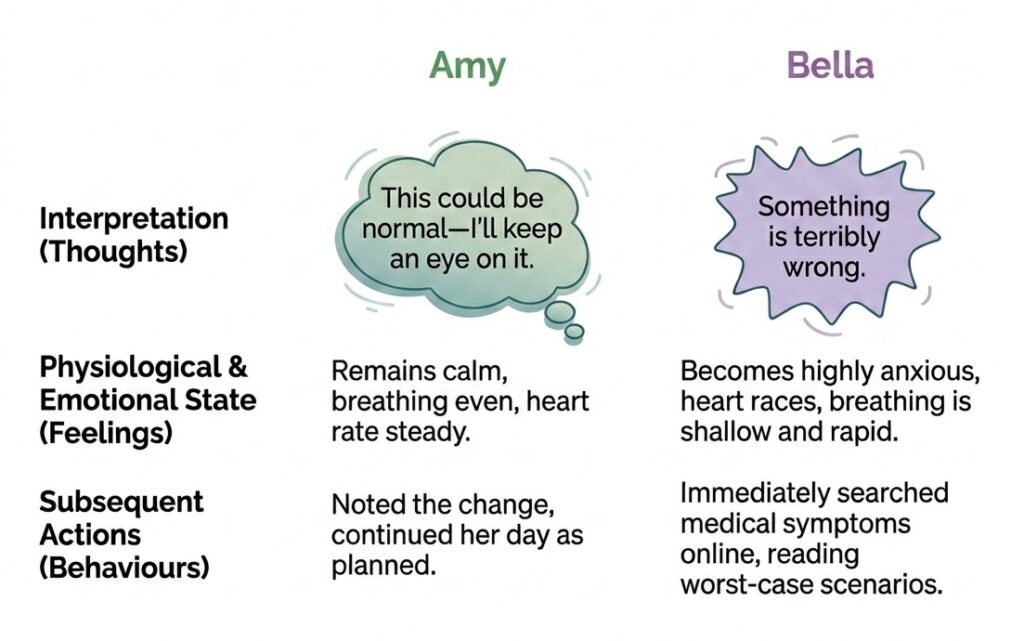
One person might think, “This could be normal—I’ll keep an eye on it,” and continue about their day.
The other might immediately think, “Something is terribly wrong,” and begin searching online for answers, reading worst-case scenarios and increasing their anxiety.
Of course, sometimes our thoughts are accurate, and there are times when it is important to seek medical advice (for example, if symptoms had continued). But jumping to conclusions without good reason can cause unnecessary distress.
One way to manage this is to actively pay attention to our thoughts, and notice whether they are helpful or unhelpful… as the types of thoughts we have can really influence how we feel.