Related Psychological Conditions
Just as at any other time in life, people can experience a range of psychological difficulties during the perinatal period, but some are particularly common. This page provides a brief overview of the mental health difficulties most common during pregnancy and the postpartum period, as well as signposting to websites that can provide more in-depth information.
Click on the tabs to learn more about each condition.
Perinatal depression
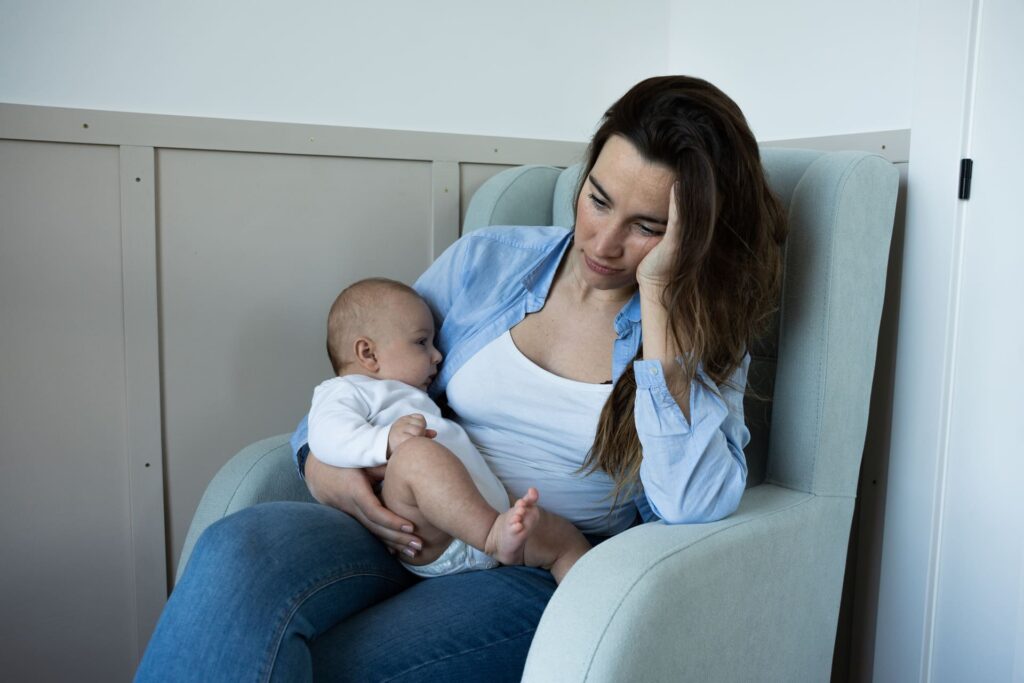
Perinatal depression is common and can occur during pregnancy, after birth, or both. Experiencing anxiety in pregnancy increases the risk of postnatal depression.
Mental health information during pregnancy and following birth tends to focus on depression and often mixes up depression and anxiety symptoms. While many people do experience both at the same time, many do not. We’ve compiled a list of the most common symptoms associated with both conditions. While some symptoms are unique to depression or anxiety, others can be present in both.

Obsessive Compulsive Disorder (OCD)
Sometimes, when perinatal anxiety is not treated, it can develop into other mental health conditions. One possible condition that can occur is Obsessive Compulsive Disorder (OCD).
OCD involves intrusive, distressing thoughts (obsessions) and repetitive behaviours (compulsions) aimed at easing anxiety. For example, fears about germs may lead to excessive cleaning, or fears about safety might cause constant checking. OCD can be very distressing, but it’s also highly treatable with therapy and support.
OCD is complex, but it may be helpful to think about it in a simple cycle of thoughts and behaviours.

Post-Traumatic Stress Disorder (PTSD)
Post-traumatic stress disorder (PTSD) can develop after any event where someone feels their life or safety, or that of another person, was threatened. In the perinatal period, this may include a difficult or frightening birth where a parent believes their own or their baby’s safety was at risk. What matters most is how the experience was perceived, not the clinical details—two people can experience the same birth very differently.
Not everyone who experiences trauma will develop PTSD, but it can follow events such as an emergency caesarean, long or painful labour, premature birth, or feeling unsupported by staff. PTSD can also affect birth partners and healthcare professionals and may arise after other distressing experiences during pregnancy or the first year after birth, such as illness, surgery, abuse, or bereavement.
Symptoms can include flashbacks, nightmares, panic, and avoiding reminders of the birth. Trauma-informed support can help recovery.

Postpartum Psychosis
Postpartum psychosis is a rare but serious mental illness that starts suddenly in the days or weeks after childbirth and is considered a medical emergency. It affects about 1–2 in every 1,000 new mothers (and birthing parents) and can occur even in people with no prior psychiatric history. Symptoms often include hallucinations, delusions, extreme mood swings, mania, confusion or depression, and behaviour that is out of character. Because it can escalate quickly and impair a person’s sense of reality, urgent medical treatment is essential. With prompt and appropriate support, most people go on to make a full recovery.