Coproduction
Experts by experience contribute to research in many ways. Click on the below headers to find out more.
-
Sharing personal experiences
- Provide insight into how perinatal anxiety is experienced, assessed, understood, or supported.
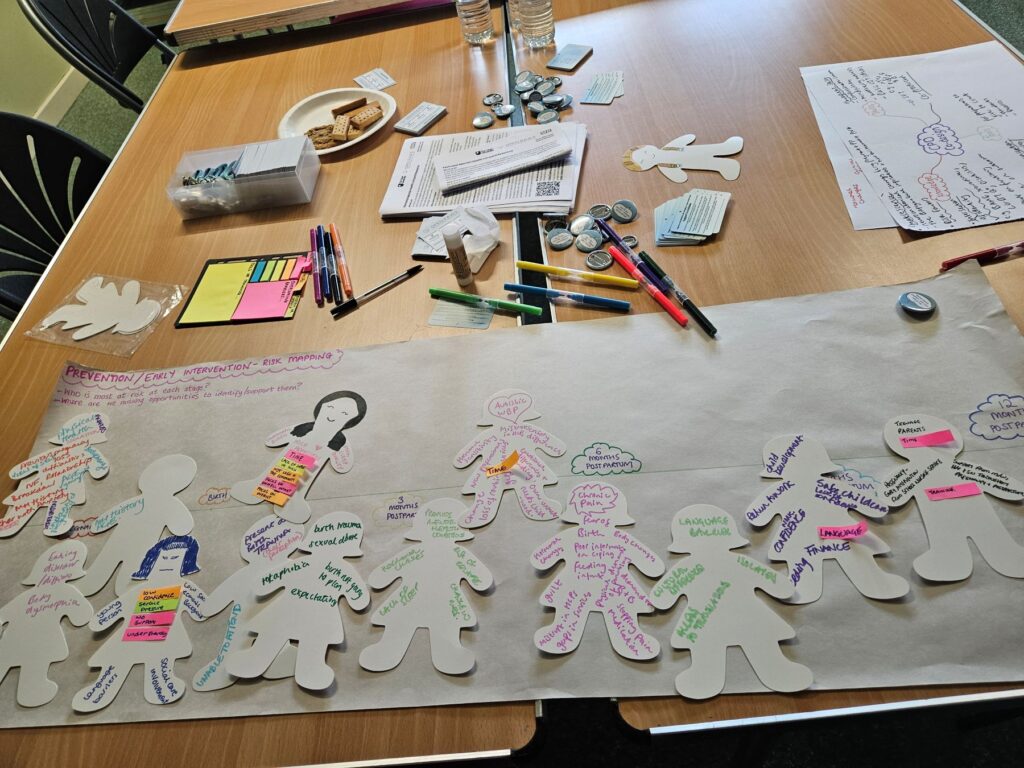
- Share experiences of timepoints, events, and experiences that may be associated with perinatal anxiety.
-
Provide insight into their experiences of their community
- Highlight ways to improve access to research amongst less-represented groups.
- Comment on the sensitivity and applicability of the research to specific groups (e.g., in relation to culture, sexuality, disability, and/or specific experiences such as pregnancy loss or neonatal admission).
-
Improve safeguarding protocols and signposting information
- Assist with the development of safeguarding procedures to protect research participants.
- Help to build comprehensive signposting information to support research participants experiencing specific difficulties.
-
Review and pilot research materials
- Provide feedback on draft research materials.
- Pilot survey questions.
-
Contribute to research outputs
- Sense-check research findings – ensure they appropriately represent community experiences
- Contribute to the development of research outputs.
Recent coproduction
Developing the Experiences Influencing Postpartum Mood (EIPPM) Questionnaire
Expert-by-Experience (EbE) coproduction played a key role in strengthening the relevance, validity, and sensitivity of the Experiences Influencing Postpartum Mood (EIPPM) research tool.
Following content analysis of open-text survey responses from over 400 postpartum women and birthing people, findings were reviewed and refined collaboratively with EbEs with lived experience of postpartum anxiety. Their involvement grounded emerging categories in real-world postpartum contexts, refined language, and highlighted nuances that may not be evident through researcher-led analysis alone.
EbEs also codesigned the final questionnaire format, including question ordering, mood-stabilisation features, and accessibility considerations (e.g., for visually impaired and neurodivergent individuals). This collaborative approach enhanced the credibility and trustworthiness of the research, ensured meaningful representation of seldom-heard experiences, and informed future survey design—particularly the development of sensitively phrased questions that balance disclosure with emotional burden.
Overall, EbE coproduction ensured the research remained person-centred, trauma-informed, and aligned with the priorities and realities of postpartum women and birthing people.
More opportunies to collaborate coming soon …